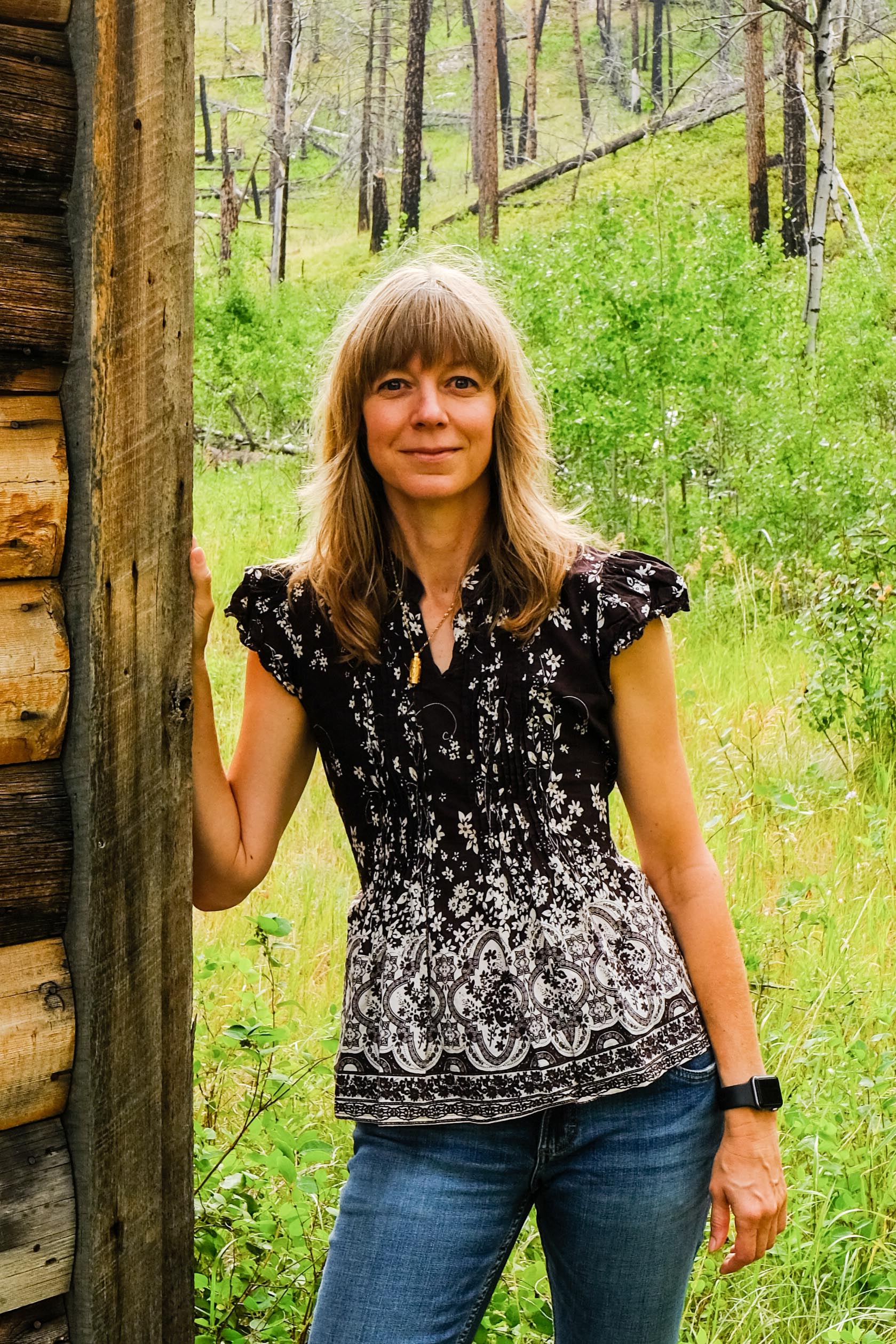
Katherine J. Curtis
CDE Director; Professor, Community and Environmental Sociology
316B Agricultural Hall
1450 Linden Drive
Madison, WI 53706
Home page
Department of Community and Environmental Sociology
Additional information
Biography
Dr. Katherine J. Curtis is Buttel-Sewell Professor of Community & Environmental Sociology and the Director of the Center for Demography & Ecology at the University of Wisconsin–Madison. Her work is centered in demography and extends to spatial, environmental, rural, and applied demography, and focuses on two central themes: population-environment interactions, most centrally the relationship between demographic, economic, and environmental forces; and spatial and temporal dimensions of social and economic inequality, most centrally historical and local forces perpetuating racial disparities. In her work, Curtis adopts place-based theoretical frameworks and employs advanced spatial and spatio-temporal statistical approaches to analyze questions about inequality, which has profound and far-reaching impacts on population wellbeing. Current projects focus on spatial differentiation in migration and fertility responses to environmental events (NICHD and NSF), age- and race-specific net migration (NICHD), and rural livelihoods and spatial connectedness (USDA).
CDE Research Area Affiliations:
Demography of Inequality; Spatial and Environmental Demography
Selected Publications:
Elizabeth Fussell, Kathryn McConnell, Selen Ozdogan, Katherine Curtis, Jack DeWaard, and Sara
Ronnkvist, 2026. Constructing Annual Migration Matrices with Census Administrative Data: The
Master Address File-Migration Flows (MAF-MIF) Data Set. CES Technical Notes Series 26-12,
Center for Economic Studies, U.S. Census Bureau.
Tawandra Rowell-Cunsolo, Meghann Bellerose, George Musa, Katherine Curtis, David Long, Elwin
Wu, Keely Cheslack-Postova, and Carl Hart. “Examining Predictors of Substance Use and
Treatment Adequacy among Formerly Incarcerated Individuals with a History of Opioid and
Cocaine Use: Research protocol.” 2025. Health & Justice.
Clayton Adamson†, Katherine J Curtis, and Sara A Peters†. “Economic Complexity and Divergent Population Growth by Race and Rurality.” 2025. Spatial Demography 13(5).
McConnell, Kathryn, Elizabeth Fussell, Jack DeWaard, Stephan Whitaker, Katherine J. Curtis, Lise St. Denis, Jennifer Balch, and Kobie Price. “Rare and highly destructive wildfires drive human migration in the US.” Nature Communications 15, no. 1 (2024): 6631.
O’Connell, Heather A., Katherine J. Curtis, Alex Mikulas, Jack DeWaard, and Junho Lee. “Spatiotemporal Changes in the Slavery–Inequality Relationship: The Diffusion of the Legacy of Slavery.” Demography 61, no. 3 (2024): 711-735.
Roland, Hugh B., Katherine J. Curtis, Kristen MC Malecki, Donghoon Lee, Juan Bazo, and Paul Block. “Geographic Isolation and Vulnerability Across Peru’s Ecological Regions: The Influence of Regional Contexts of Extraction.” Annals of the American Association of Geographers (2023): 1-23.
Winkler, Richelle, and Katherine J. Curtis. “Indirect Methods for Estimating Internal Migration.” In Selected Topics in Migration Studies, pp. 213-215. Cham: Springer Nature Switzerland, 2023.
DeWaard, Jack, Elizabeth Fussell, Katherine J. Curtis, Stephan D. Whitaker, Kathryn McConnell, Kobie Price, Michael Soto, and Catalina Anampa Castro. “Migration as a Vector of Economic Losses From Disaster-Affected Areas in the United States.” Demography 60, no. 1 (2023): 173-199.